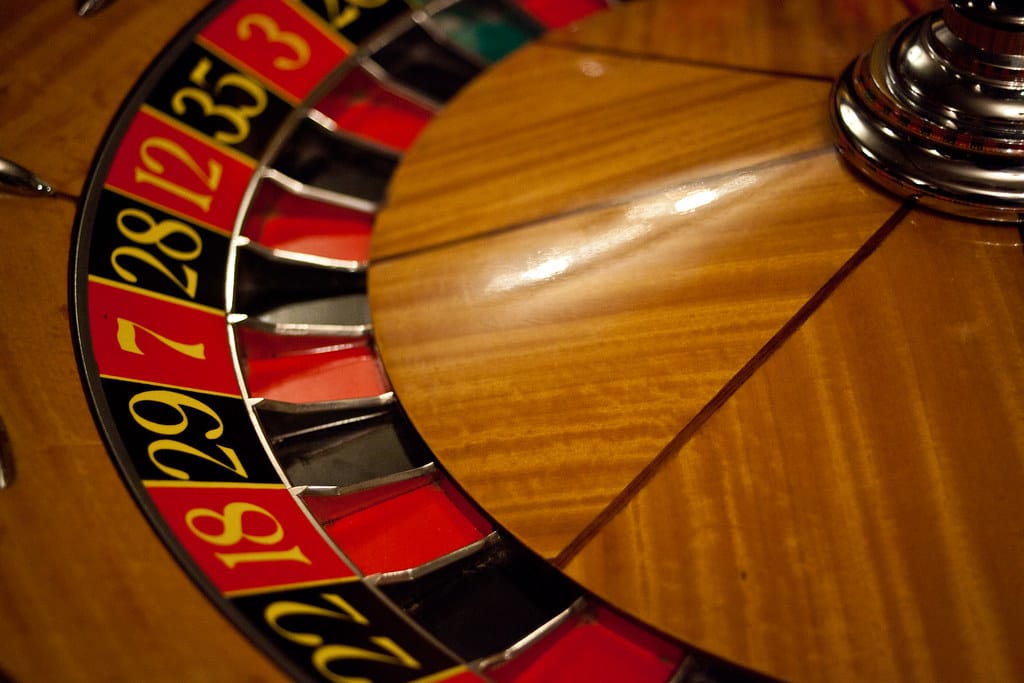
Roulette is one of the oldest casino games in existence, and live dealer technology has brought it into the digital age without losing any of the tension that makes a spinning wheel compelling. UK players can access dozens of live roulette tables around the clock, from standard European variants starting at £1 per spin to high-limit rooms with six-figure maximum bets. This guide explains how live roulette works, what the numbers mean, and how to approach the game with realistic expectations.
How Live Roulette Differs from Software Roulette
In standard online roulette, outcomes are determined by a certified random number generator. In live roulette, a real dealer in a broadcast studio spins an actual physical wheel. Cameras capture every angle — the full wheel, the ball release, the landing pocket — and the result is transmitted to your browser in near real time.
A game control unit reads the wheel's sensors and communicates the winning number to the software, which then settles all bets automatically. The process typically takes between 60 and 90 seconds per round, including a betting window during which you place wagers on a digital replica of the felt layout.
Why Physical Wheels Still Matter
Some players prefer live roulette on the grounds that they trust a physical wheel more than a software algorithm, even though certified RNG software is independently audited and legally equivalent. Others simply prefer the atmosphere: a real dealer, real ball, real spin. Either way, the house edge is mathematically identical — determined by the structure of the wheel, not the mechanism producing the outcome.
Wheel Types and House Edges
European Roulette
The standard wheel for UK-facing tables. It has 37 pockets numbered 0 through 36. The single zero gives the house its edge: if every number were covered equally, the true odds of winning a single number bet would be 36:1, but the payout is 35:1. This one-pocket shortfall produces a house edge of 2.70% on all bets.
French Roulette
Uses the same single-zero wheel as European roulette but adds two rules that significantly improve odds on even-money bets (red/black, odd/even, high/low):
- La Partage: if the ball lands on zero, you recover half your even-money stake automatically
- En Prison: instead of losing, your even-money bet is held for the next spin; if it wins, you recover it in full
Both rules reduce the house edge on even-money bets from 2.70% to approximately 1.35%. French roulette is the best-value standard variant for UK players.
American Roulette
Has 38 pockets: 0 through 36 plus an additional 00. The extra pocket doubles the house's advantage. House edge: 5.26%. There is no compensating rule equivalent to La Partage. Single-number bets still pay 35:1, but the true odds are now 37:1. American roulette is the worst-value common variant and should generally be avoided if European or French options are available.
Speed Roulette and Auto Roulette
Some live tables spin continuously with a very short betting window — sometimes as little as 25 seconds — and no dealer commentary. These variants are designed for players who want volume. The tradeoff is that you can accumulate more rounds per hour, increasing your total exposure to the house edge.
Bet Types Explained
Inside Bets
Placed directly on numbers within the main grid:
- Straight Up: one number, pays 35:1
- Split: two adjacent numbers, pays 17:1
- Street: three numbers in a row, pays 11:1
- Corner: four numbers sharing a corner, pays 8:1
- Six Line: two adjacent rows of three, pays 5:1
Outside Bets
Placed in the areas surrounding the main number grid:
- Red/Black: pays 1:1, house edge 2.70% on European (1.35% on French with La Partage)
- Odd/Even: same odds as red/black
- High/Low (1-18 or 19-36): same odds as red/black
- Dozens (1-12, 13-24, 25-36): pays 2:1
- Columns: three vertical columns, pays 2:1
Called Bets and Neighbours
Available on tables with a racetrack display, these bets cover sections of the wheel by physical position rather than number sequence:
- Voisins du Zéro: covers 17 numbers around zero, costs 9 chips
- Tiers du Cylindre: covers 12 numbers on the opposite side of the wheel, costs 6 chips
- Orphelins: covers the 8 numbers not in the above groups, costs 5 chips
- Neighbours: a single number plus two numbers on each side (5 numbers total), 5 chips
Table Limits at UK Live Casinos
Limits vary by provider and table type:
- Budget tables: minimum £0.50 or £1 on outside bets, maximum £500 to £1,000
- Standard tables: minimum £1 to £5, maximum £5,000 to £10,000 on outside bets
- High-roller tables: minimum £25 to £100, maximum £100,000 or above
- Single-number (straight-up) maximums are usually lower, often £100 to £500 on standard tables
Live Roulette Variants Worth Exploring
Immersive Roulette
Uses additional cameras and slow-motion replay at the moment the ball settles. No rule changes — same European wheel, same 2.70% edge — but the presentation is considerably more dramatic.
Lightning Roulette
Evolution's flagship variant adds randomly generated multipliers to between one and five straight-up numbers on each spin. Multipliers range from 50x to 500x. In exchange, the standard straight-up payout is reduced from 35:1 to 29:1. The overall RTP is stated at 97.10%, which is actually slightly better than standard European (97.30%) on outside bets — but straight-up bettors get a worse base payout in return for the multiplier lottery.
Salon Privé Roulette
A high-limit area with no table-sharing: you control the spin timing. Minimums typically start at £1,000 per spin.
Double Ball Roulette
Two balls are launched simultaneously. Most bets pay enhanced odds because you need both balls to land in specific positions. The house edge varies by bet type but generally remains competitive with standard European roulette.
Practical Playing Tips
Setting a session budget before you open the lobby is the single most effective discipline tool available. Decide in advance what you are willing to lose — and be specific. Then choose a table minimum that gives your bankroll longevity. At a £5 minimum, a £100 budget covers 20 spins even if you lose every one, which is statistically unlikely over a short session.
Understanding that no betting system changes the underlying house edge is equally important. The Martingale — doubling after each loss — is the most popular system and the most dangerous. It works until it doesn't, at which point the losses are catastrophic relative to the small wins accumulated along the way. Table limits exist partly to prevent Martingale players from recouping unlimited losses.
All UKGC-licensed live roulette tables must offer session time alerts, deposit limits, and self-exclusion. These tools are there for a reason. If you find yourself chasing losses, activate a cooling-off period through your account settings.
Conclusion
Live roulette is a game of pure chance with a fixed and transparent house edge. On a European wheel that edge is 2.70%; on French roulette with La Partage on even-money bets it falls to 1.35%; on American roulette it rises to 5.26%. Choose your wheel wisely, understand what each bet costs you in expected value, and enjoy the spectacle of a real wheel spinning in real time. The game cannot be beaten over the long run, but it can be enjoyed responsibly with a clear head and a set budget.